
Boundaries and Divisions for Working Land
Farm Fencing in Baton Rouge for rural properties needing functional livestock containment and pasture management
Larger properties in the Baton Rouge region often include livestock areas, pasture divisions, or perimeter boundaries that must withstand animal pressure, weather exposure, and daily use without frequent repair. Farm fencing establishes those divisions using materials and layouts suited to the property's terrain, size, and intended function. Fencing USA installs farm systems for rural and agricultural properties across Ascension Parish, East Baton Rouge Parish, and surrounding areas, planning post spacing, gate locations, and material selection around how the land is actually used.
The service addresses property lines, internal pasture divisions, access points for equipment and vehicles, and livestock containment, with fence height and strength calibrated to the animals or property management goals involved. Installation accounts for uneven terrain, soil drainage, gate swing clearance, and whether sections need to be electrified or reinforced for specific animal types.
Schedule a site visit to review your property layout and discuss fencing priorities.
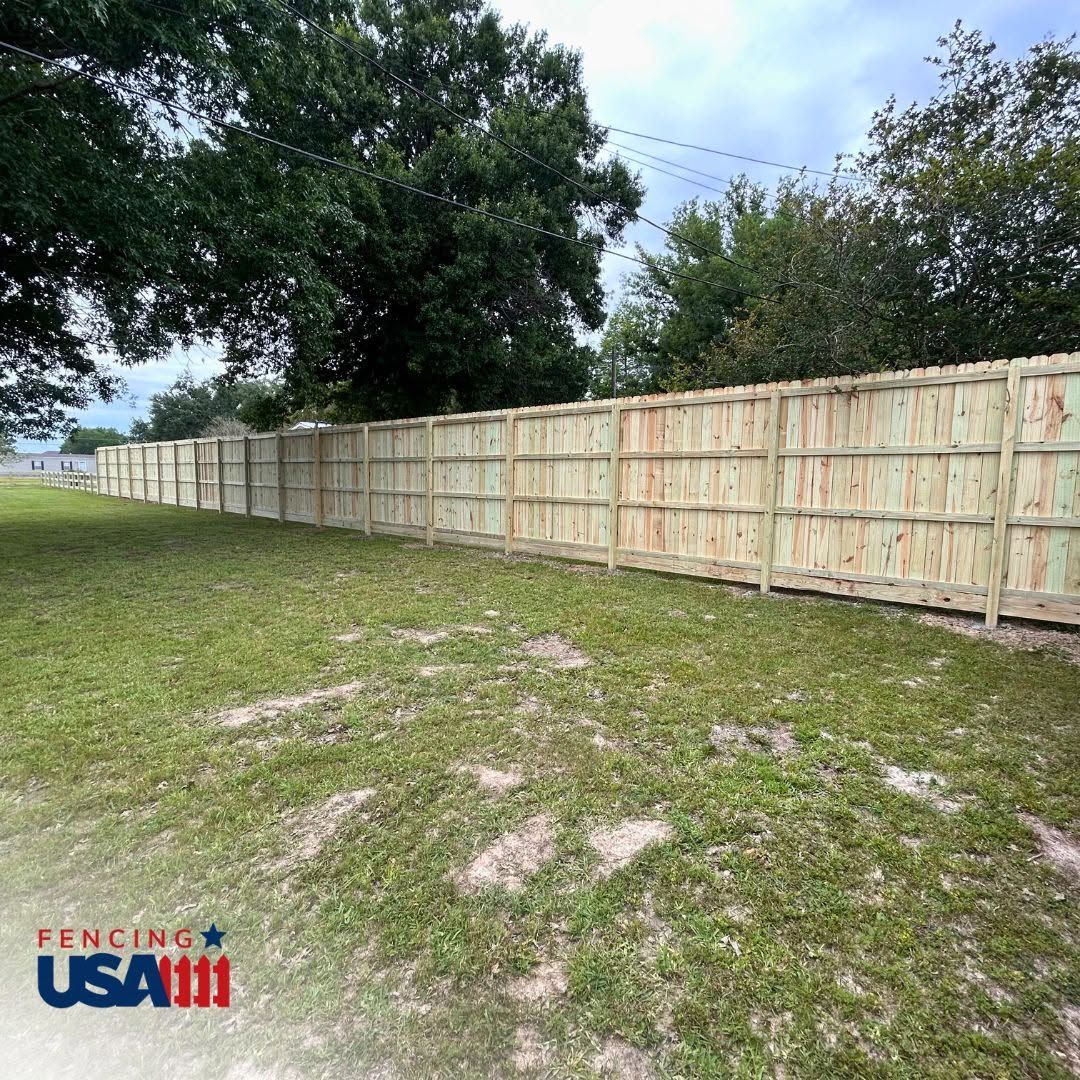

How Farm Fencing Addresses Property Use
Farm fence installation begins with surveying the property to identify boundaries, grade changes, drainage patterns, and where gates are needed for tractor access, livestock rotation, or routine maintenance. Posts are set in concrete or compacted soil depending on load requirements and soil composition, with spacing determined by fence type and animal pressure. Wire, rail, or board fencing is then attached to those posts, with tension adjusted to prevent sagging or gaps that animals could exploit.
Once the system is complete, you move livestock between pastures without chasing animals through open fields, and your property boundaries are clearly marked to prevent disputes or trespassing. Gates open wide enough for equipment to pass through, and corner bracing distributes tension across long fence runs to keep the system taut and stable over time.
The project also considers access for mowing, hay transport, and future expansion, since adding gates or extending fence lines later becomes more costly if the initial layout does not account for growth. Sections exposed to flooding or standing water after heavy rain require post treatments or elevated installation to prevent rot and instability, which is common in low-lying areas around Baton Rouge.
Answers to Frequent Service Questions
Property owners often ask how farm fencing adapts to their land and what choices affect long-term durability.
What fencing materials are used for farm properties?
Options include woven wire for general livestock containment, high-tensile smooth wire for perimeter boundaries, board or rail fencing for visibility and horse-safe enclosures, and barbed wire for cattle on larger acreage, with material choice depending on animal type, budget, and maintenance capacity.
How does terrain affect farm fence installation in Baton Rouge?
Properties with slopes, drainage ditches, or uneven ground require stepped post heights and adjusted wire tension to prevent sagging in low spots, and posts in poorly draining soil need deeper footings or gravel backfill to resist shifting during wet conditions common in this region.
What gate configurations work best for farm access?
Single-swing gates suit pedestrian and small equipment access, while double-swing or sliding gates accommodate tractors and hay trucks, and the decision depends on opening width, available clearance space, and how often the gate will be operated under load.
How long does farm fencing last?
Lifespan depends on material type, post treatment, soil conditions, and animal pressure, with treated wood and galvanized wire typically providing decades of service if installed correctly, though high-traffic areas and gates may require component replacement sooner.
What should I consider when planning pasture divisions?
Think about rotational grazing patterns, water source access in each section, shade availability, and whether livestock need to be separated by size or species, since these factors determine how many divisions you need and where gates should be placed for efficient daily management.
Fencing USA designs farm fencing systems around your property's size, terrain, and livestock requirements, ensuring boundaries and divisions function reliably through daily use and seasonal weather. Reach out to discuss your acreage and access needs with our team.
