
Clean Lines Without Constant Upkeep
Aluminum Fencing in Baton Rouge for properties requiring defined boundaries without blocking garden views
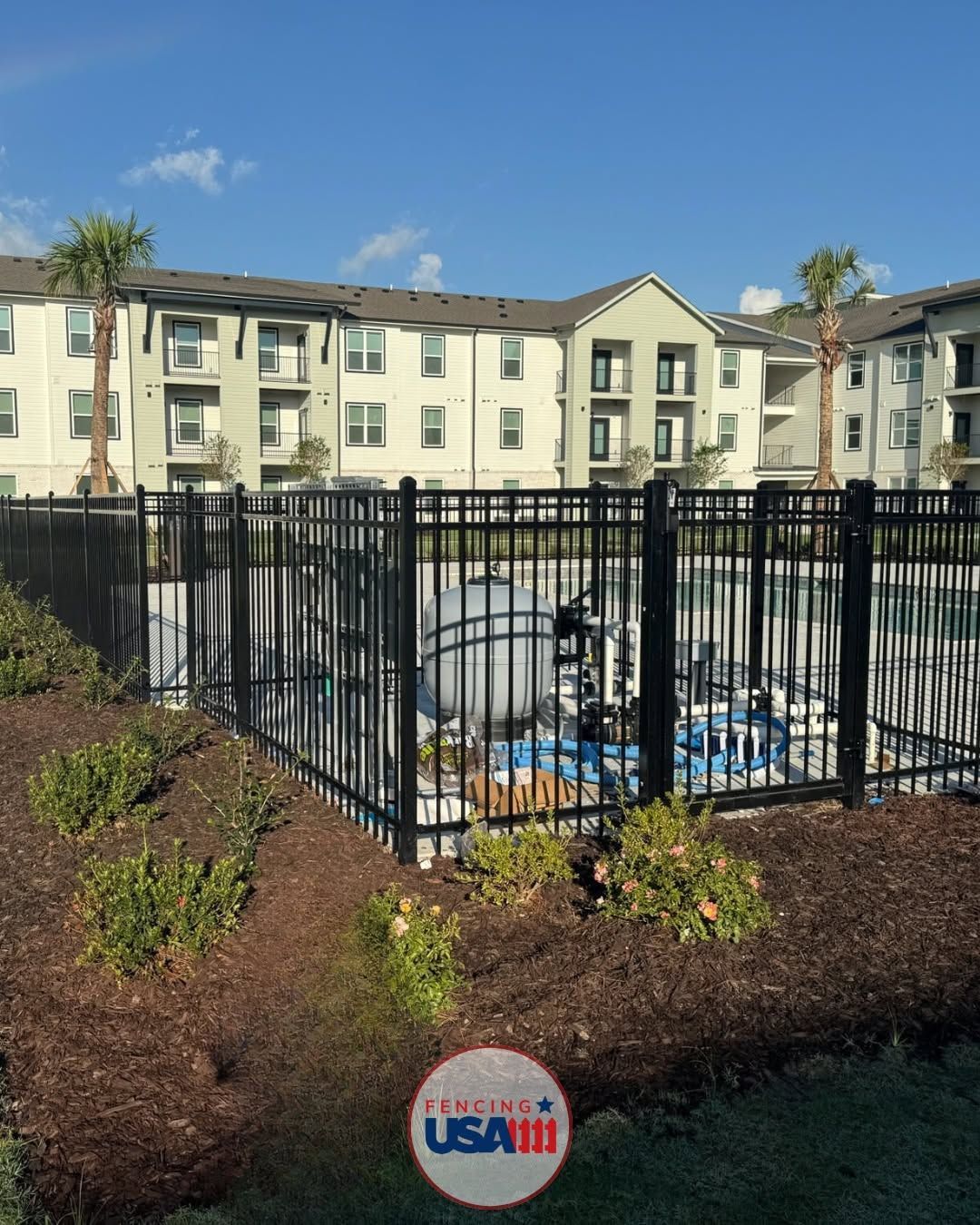
Properties across Baton Rouge often need visible boundaries that don't create solid visual barriers or require annual repainting to prevent rust. Fencing USA installs aluminum fencing for homeowners who want separation between front yards and sidewalks, enclosures around pool decks, or perimeter definition that maintains an open feel while establishing clear property lines. The metal doesn't corrode in humid conditions the way steel does, and powder-coated finishes resist fading even when exposed to direct sunlight during summer months when UV intensity peaks across Louisiana.
Aluminum fencing creates structured boundaries using vertical pickets spaced at intervals that allow airflow and visibility while preventing access. Posts anchor into concrete footings, horizontal rails connect at welded or bracketed joints, and gate frames swing on hinges designed for repeated daily use. The finished installation defines space without the maintenance cycle required by wood or the rust concerns that come with uncoated ferrous metals exposed to moisture and salt air drifting inland from the Gulf.
Arrange a property assessment to identify optimal placement around landscaping, walkways, and outdoor living areas.

Why Aluminum Performs in Gulf Coast Conditions
Aluminum resists oxidation because it forms a protective layer when exposed to air, unlike steel which develops rust that spreads and weakens structural integrity. This matters in Baton Rouge where relative humidity regularly exceeds eighty percent and summer thunderstorms deliver moisture that lingers on metal surfaces for hours after rain stops. Powder coating adds color and an additional barrier against UV degradation, but the underlying metal remains stable even if the finish eventually shows wear in high-traffic gate areas or where sprinklers repeatedly wet the same sections.
Once installed, you'll notice the fence maintains its appearance without seasonal painting or rust removal. Gate operation stays smooth because aluminum's lighter weight reduces stress on hinges compared to heavier steel gates that sag over time. The open design allows you to monitor front yard activity from inside the house, keeps landscaping visible from the street, and doesn't trap heat or block breezes the way solid privacy panels do during Louisiana's extended summer season.
Aluminum fencing works best where appearance and low maintenance outweigh privacy needs. It won't block noise from nearby roads, won't prevent determined animals from squeezing through wider picket spacing, and won't provide the complete visual screening that wood or vinyl panels offer. The trade-off is simple: you eliminate rust, reduce maintenance hours, and preserve sightlines across your property.
Questions Property Owners Bring Up
Aluminum fencing decisions involve balancing visibility, maintenance expectations, and site-specific installation requirements that vary depending on soil conditions and property use across the Baton Rouge area.
How does aluminum compare to steel for perimeter fencing?
Aluminum costs more per linear foot but eliminates rust maintenance entirely, while steel offers greater impact resistance at lower initial cost but requires ongoing rust prevention in humid climates where protective coatings eventually fail.
What picket spacing works for pet containment without blocking views?
Four-inch spacing prevents most dogs from squeezing through while maintaining open sightlines, though smaller breeds and determined diggers require additional considerations like buried barriers or narrower spacing in specific sections.
When should gate width accommodate equipment access beyond pedestrian use?
Gates designed only for foot traffic create problems when you need to move lawn equipment, delivery items, or outdoor furniture between front and back yards, requiring at least forty-eight inches clear width for practical everyday use.
How do installation methods differ in Baton Rouge's clay soils compared to sandy regions?
Clay's expansion and contraction cycle during wet and dry periods requires deeper post-setting and concrete footings that extend below the active soil zone, typically thirty inches or more depending on local drainage patterns.
What height balances boundary definition with neighborhood aesthetics?
Four-foot fencing defines boundaries without creating fortress-like appearance in residential settings, while six-foot installations provide greater security and noise reduction but may require variance approval depending on zoning regulations in specific Baton Rouge neighborhoods.
Fencing USA serves Baton Rouge, Geismar, Sorrento, St. Amant, Dutchtown, Baker, Walker, Zachary, and surrounding communities throughout East Baton Rouge and Ascension parishes. Contact us at (225) 953-0299 to discuss your property's layout, review aluminum fencing styles suited to your specific needs, and schedule a site visit for a detailed project estimate.
